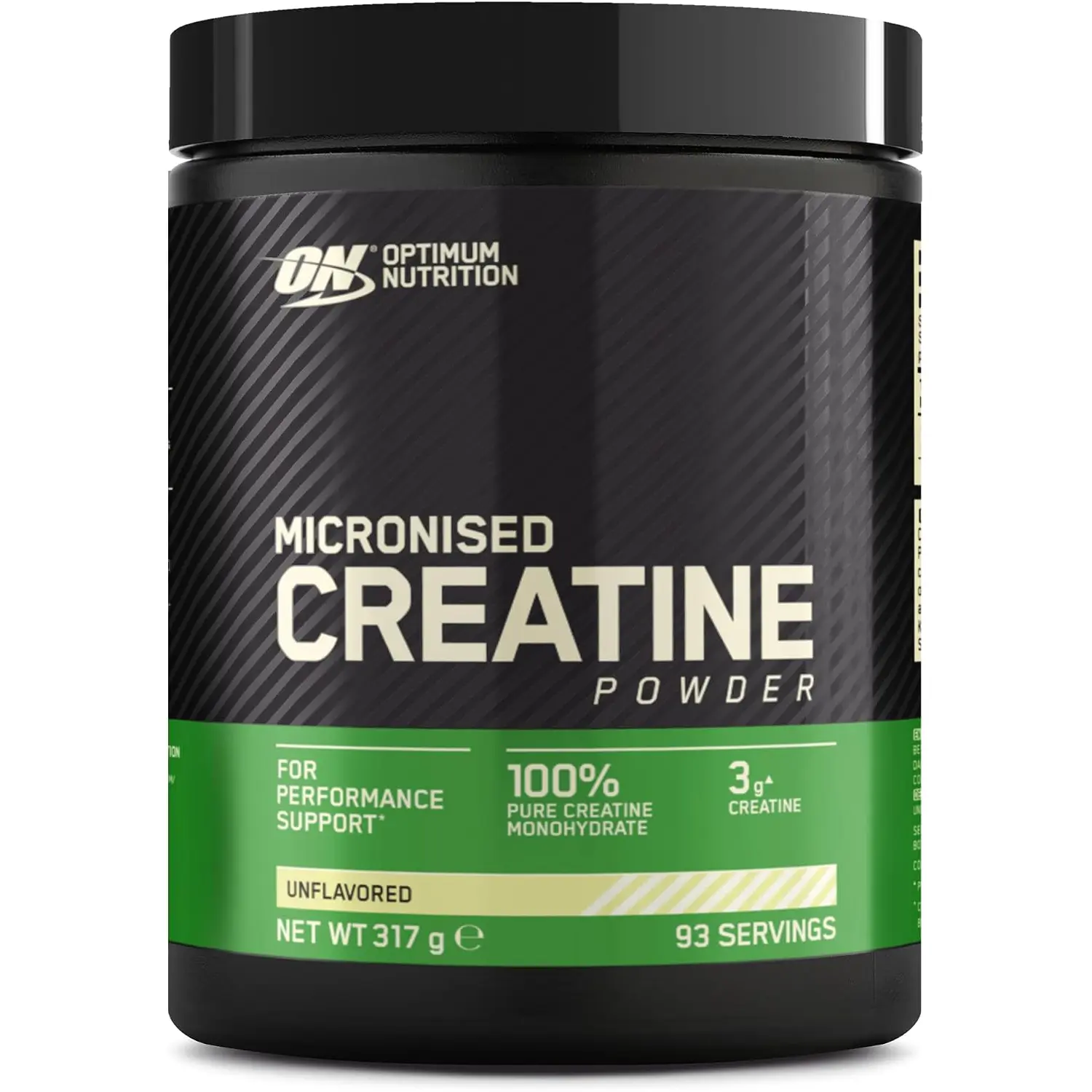
Optimum Nutrition
Micronised Creatine Monohydrate Powder — 300g, Unflavoured
- ✓ #1 Best Seller in Creatine — 35,000+ verified reviews
- ✓ The most researched supplement in existence — decades of published studies
- ✓ Supports muscle strength, power output and recovery — especially valuable after 50
- ✓ Cognitive function benefits — emerging evidence for working memory and mental energy
- ✓ 93 servings at €0.05 per gram — one of the cheapest supplements per dose
- ✓ Unflavoured — mixes into water, juice or yogurt with no taste whatsoever
Affiliate link — as an Amazon Associate we earn from qualifying purchases at no extra cost to you. Full disclosure.
The Supplement That Matters More After 50, Not Less
Creatine monohydrate is the most thoroughly researched supplement in the history of sports nutrition, and the evidence is unusually clear: it works. But here is what the fitness industry rarely emphasises — creatine is arguably more important for adults over 50 than it is for younger people. From around age 50, sarcopenia (age-related muscle loss) accelerates. Without intervention, adults lose roughly 1–2% of muscle mass per year from this point, which compounds over time into reduced strength, worse balance, slower metabolism and a higher risk of falls. Creatine is one of a very small number of supplements with genuine, replicable evidence for slowing this process. It is not a performance drug for competitive athletes — it is a practical tool for anyone who wants to keep their body functioning well as they age.
What creatine actually does is straightforward. Your muscles use a molecule called ATP as their immediate energy currency for short, high-intensity efforts — picking something up, climbing stairs, a set of bicep curls. Creatine replenishes ATP faster during these efforts, which means you can sustain output for slightly longer before fatigue sets in. In practical terms, you can do more repetitions before failure, recover faster between sets, and accumulate more training stimulus over time. More training stimulus means more muscle retained or built. For strength, it is one of the few ergogenic aids with a consistent effect size across the research literature. The unflavoured Optimum Nutrition powder delivers 3g of micronised creatine per serving — a dose that matches what the research supports — for roughly five cents a day.
The cognitive angle is worth noting, particularly for adults over 50. A growing body of research suggests creatine supports working memory and mental energy, especially in situations of sleep deprivation or cognitive stress. The brain uses creatine for the same ATP-regeneration process as muscle, and older adults have lower baseline levels of creatine in brain tissue. While this research is still developing and creatine is not a cognitive supplement in the way it is a performance supplement, the direction of the evidence is consistent. At €14.99 for 93 servings, adding it to your daily routine requires very little justification.
How to Take Creatine Correctly
Dosing — keep it simple. The standard and well-researched dose is 3 to 5 grams per day. Optimum Nutrition’s serving size is 3g, which is the lower end of this range and fully sufficient for most adults. There is no established benefit to taking more than 5g daily, and no need for complicated loading protocols. One scoop, every day, is the entire protocol. Consistency over weeks and months is what produces results, not the precise amount per dose.
Timing — before or after training. Research comparing pre-training and post-training creatine timing shows very modest differences, with a slight edge to post-training in some studies. In practice, the difference is negligible. What matters far more than timing is taking it daily without missing days. Choose whichever timing fits naturally into your routine — with your morning coffee, with your post-workout meal, or stirred into yogurt in the evening — and stick to it. Linking creatine to an existing daily habit is the best way to ensure you actually take it consistently.
Mixing — it goes with almost anything. Micronised creatine dissolves reasonably well in liquid at room temperature. Stir it into a glass of water, a glass of juice, or a protein shake. Because this version is completely unflavoured, it adds no taste at all to whatever you mix it with — you will not notice it in coffee, yogurt, smoothies or porridge. Warm liquids dissolve it faster if you prefer a fully clear drink. Avoid mixing into carbonated drinks in a sealed container as the powder can cause fizzing.
What to expect in the first two to four weeks. Some people notice a slight increase on the scales in the first week — typically 0.5 to 1kg — as creatine draws water into muscle cells. This is normal and is associated with improved muscle function, not fat gain or bloating. Performance improvements typically become noticeable at two to four weeks: extra repetitions before failure, slightly faster recovery between sets, and less fatigue towards the end of a workout. These are modest but consistent effects that compound meaningfully over months of training.
Long-term use — no cycling required. Unlike some supplements, creatine does not require cycling on and off. The research supports continuous daily use without any established safety concerns for healthy adults. Stopping creatine causes muscle creatine stores to return to baseline within four to six weeks, at which point any performance benefit fades. If you take a break for a holiday or run out, simply restart at your usual dose — there is no need to reload.
Honest Assessment
✓ What’s Good
- The most researched supplement in existence — the evidence base is unusually robust and consistent
- Very cheap per dose at roughly €0.05 per gram — a three-month supply costs less than a single gym session
- Completely unflavoured — mixes invisibly into any food or drink without altering taste
- Measurable improvement in strength and exercise capacity within two to four weeks
- Emerging evidence for cognitive benefits — working memory and mental energy — relevant from middle age onwards
- No side effects at standard doses in healthy adults; safe for indefinite daily use
- Vegetarian and vegan suitable — no animal-derived ingredients
⚠️ Worth Knowing
- Slight water retention in the first week — intramuscular, not subcutaneous, but the scales will move briefly
- Results take two to four weeks to become noticeable — not an immediate effect
- Needs consistent daily use to maintain muscle creatine saturation; gaps in intake reduce benefit
- Being tasteless and odourless makes it easy to forget to take — linking it to a fixed daily habit is essential
Product Specifications
- BrandOptimum Nutrition
- TypeCreatine Monohydrate (micronised)
- Size300g
- Servings93
- Dose3g per serving
- FlavourUnflavoured
- Suitable forVegetarian and vegan
- Price per gram~€0.05
- Rating4.7 / 5 — 35,000+ reviews
Frequently Asked Questions
Yes. Creatine monohydrate has one of the longest and most thorough safety records of any dietary supplement, with research spanning decades and covering adults of all ages including older populations. At the standard dose of 3 to 5 grams per day there are no established adverse effects in healthy adults. If you have pre-existing kidney disease you should speak to your GP before starting any new supplement.
No. Loading protocols — taking 20g per day for five days — were developed to saturate muscle creatine stores faster, but a standard daily dose of 3 to 5 grams achieves the same saturation level within three to four weeks. There is no meaningful long-term performance benefit from loading, and the higher doses are more likely to cause the mild digestive discomfort that gives creatine an undeserved reputation for side effects. One scoop per day from day one is all that is needed.
Most people notice a measurable improvement in exercise performance within two to four weeks of consistent daily use — typically the ability to complete more repetitions before fatigue, or faster recovery between sets. The first week may bring a small increase on the scales due to water being drawn into muscle cells, which is a normal and harmless response. Patience is required; creatine is a long-term tool, not an overnight effect.
You can, and the evidence for cognitive benefits — support for working memory and mental energy — applies regardless of exercise. However, the muscle-building and strength benefits of creatine are most pronounced when combined with resistance training. Without exercise, creatine has much less to work with in terms of muscle adaptation. If you are not yet exercising, pairing creatine with even a simple dumbbell programme will significantly amplify the physical benefit.
Creatine draws water into muscle cells, which can result in a slight increase on the scales in the first week or two — typically 0.5 to 1kg. This is intramuscular water, not subcutaneous bloating, and it is associated with the increased cell volume that supports muscle function. Gastrointestinal bloating is rare at the standard 3g dose and is usually linked to taking creatine on an empty stomach; taking it with food or dissolving it thoroughly in liquid resolves this for most people.
Goes Well With
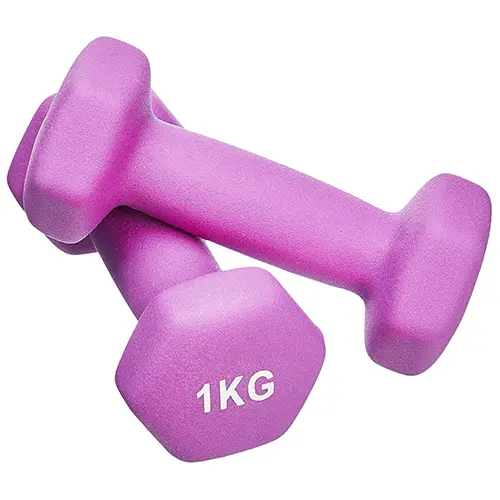
Amazon Basics Neoprene Dumbbells
Creatine supports the energy system behind short bursts of resistance work — pair it with dumbbells to make training count.
From €8.91
Buy on Amazon.ie →Affiliate link
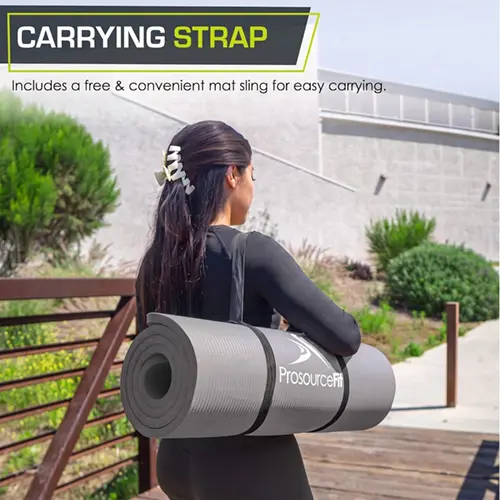
ProsourceFit Exercise Mat
The mat that makes floor work comfortable — pair with creatine to get more out of every session.
€16.67
Buy on Amazon.ie →Affiliate link
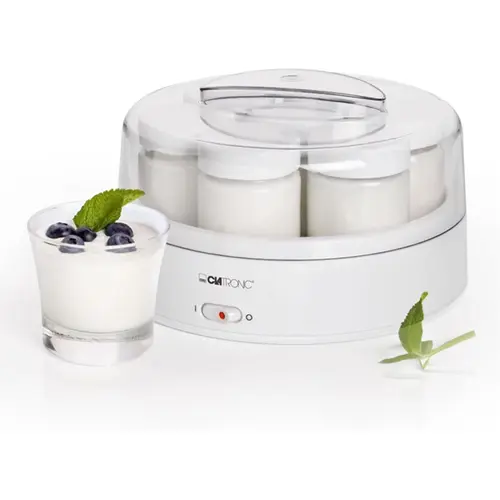
Clatronic Yogurt Maker
Stir your creatine dose into home-made yogurt — you won’t taste it, and the high-protein yogurt supports recovery.
€45.37
Buy on Amazon.ie →Affiliate link